Swiss-Type CNC Lathe Machining (Hardinge)
Small Precision Turned Parts, Held to ±0.002 mm
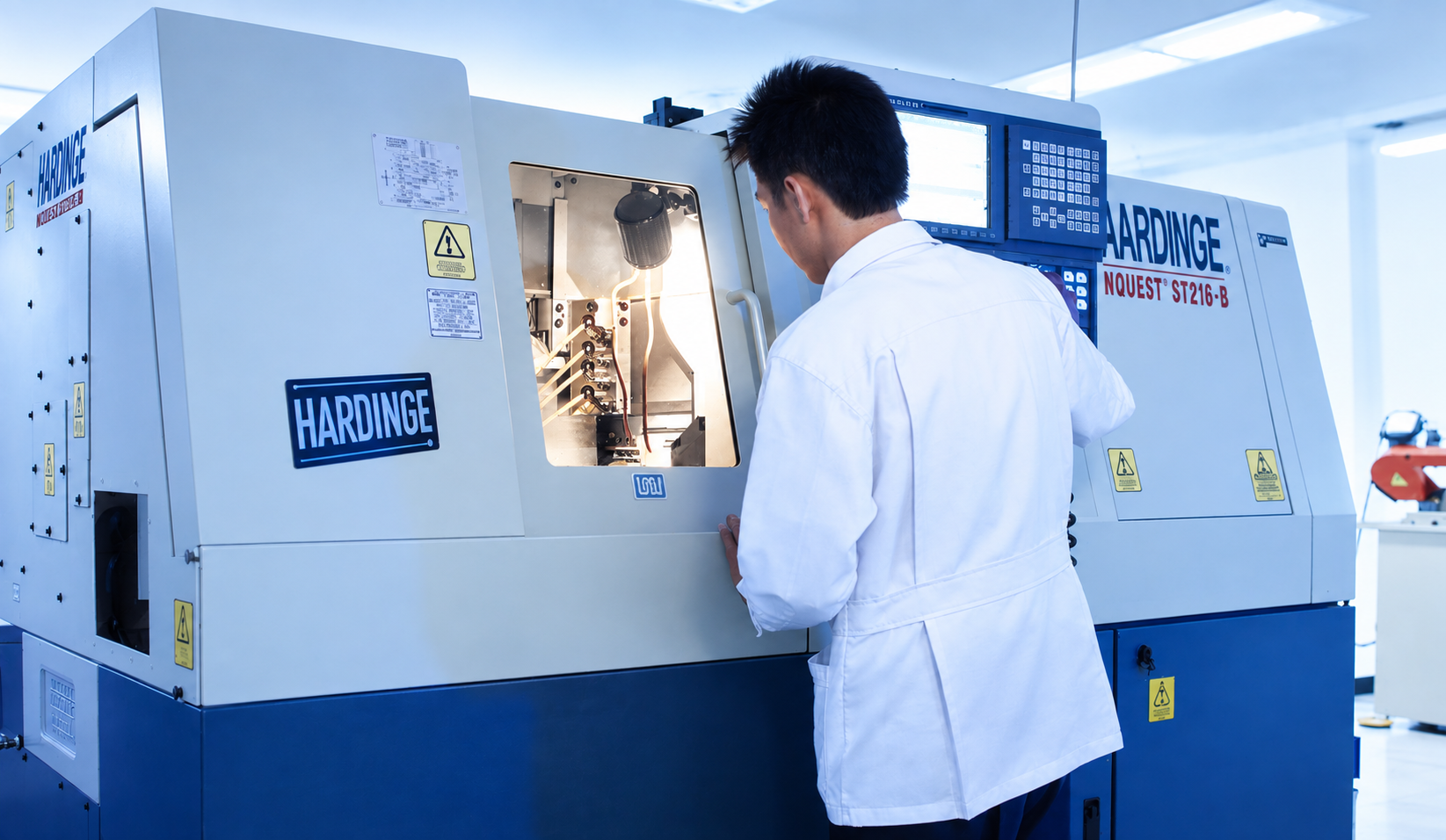
Technic Enterprise & Technology provides high-precision Swiss-type CNC turning on a 6-axis Hardinge Conquest ST216 at our factory in Samut Prakan, Thailand. Ideal for small-diameter parts, long slender shafts, and features that must hold tolerances down to ±0.002 mm. We run everything from prototypes to ongoing production, with a dimensional inspection report for every lot under our ISO 9001:2015 quality system.
How Swiss-Type Differs from Conventional CNC Turning
A conventional CNC lathe grips the workpiece in a chuck and lets the free end take the cutting load. The longer and more slender the part, the greater the overhang — and the more the workpiece deflects, making size control difficult and leaving chatter on the surface.
A Swiss-type (sliding-headstock) lathe solves this at the source: bar stock feeds through a guide bushing, and the cutting point stays within a few millimeters of the bushing at all times. The workpiece is supported continuously no matter how long the turned length — which is why long slender shafts, thin-walled parts, and tight-tolerance work are typically run on Swiss-type machines.
When to Choose Swiss-Type — An Engineer’s Checklist
If your part meets any of the conditions below, Swiss-type is usually the right answer on both quality and cost:
Long, slender parts (high L/D)
Parts longer than about 3× their diameter that deflect on a conventional lathe — taper along the length, inconsistent diameters, or chatter marks. Typical examples: small shafts and probe pins.
Small Ø + tight tolerances
Parts a few millimeters in diameter that must hold ±0.002 mm, or thin-walled parts that standard chuck pressure would distort.
Many features, one setup
Turning, cross-holes, milled slots, and back-side work — 6-axis dual-path control with main spindle + sub-spindle + live tooling finishes the part in a single setup, eliminating stack-up error from re-fixturing and reducing scrap.
To be straightforward: if your part is large in diameter, short and stubby, or a simple shape in small quantities, a conventional CNC lathe is usually more economical. Send us the drawing — we’ll recommend the process that fits best, and it isn’t always Swiss-type.
Our Machine: Hardinge Conquest ST216
Hardinge is a US precision machine tool builder well known in the small-parts world. Our Conquest ST216 Swiss-turn has been producing parts for the HDD and electronics industries for years, maintained and calibrated under our ISO 9001:2015 system.
Machine at a Glance
| Machine type | Swiss-turn CNC lathe (sliding headstock with guide bushing) |
| Controlled axes | 6 axes — multiple independent tool slides cutting on two paths simultaneously, plus C-axis for precise angular positioning of cross-holes and slots around the part |
| Control | GE Fanuc 18T Dual Path — independent, simultaneous control of the main- and sub-spindle sides |
| Sub-spindle | Picks the part off the main spindle for back-side work in the same setup |
| Live tooling | Cross-drilling, slot milling, and flats without moving the part to another machine |
| Max bar capacity | Ø 16 mm |
| Achievable tolerance | ±0.002 mm |
Parts That Suit This Machine
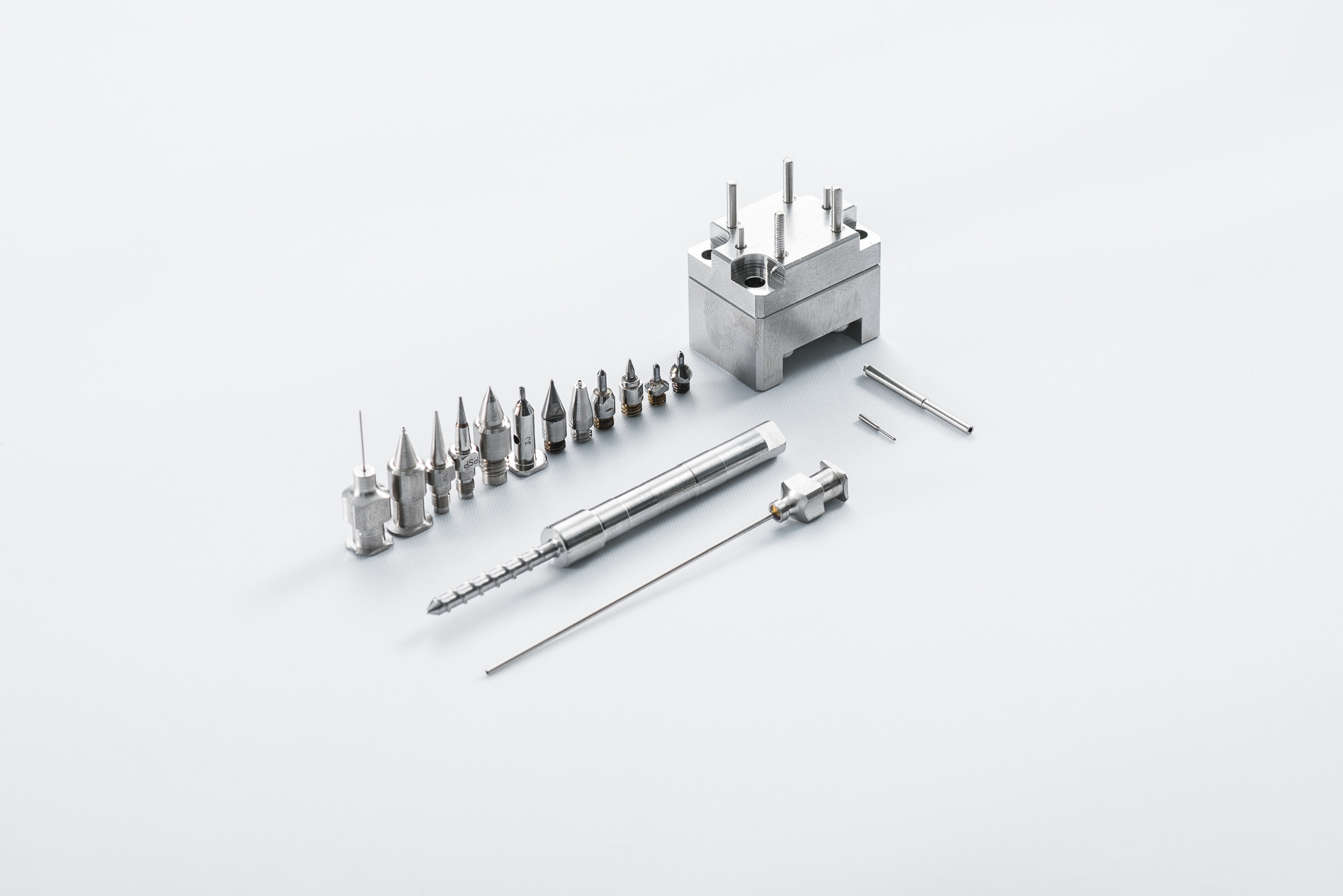
- Small shafts, precision pins, and dowel pins held to micron-level sizes
- Thin-walled bushings, sleeves, and spacers
- Small cylindrical components for the HDD, semiconductor, and power-electronics industries
- Turned parts with cross-holes, slots, or flats that must sit precisely relative to the turning axis
Materials We Machine
We specialize in the materials most machine shops turn away — the list below is everything we actually run.
For Swiss-type turning specifically, the most common materials are SUS303 (free-machining), 440C, BeCu, and A6061 — ultra-hard materials such as tungsten carbide are shaped with grinding and EDM alongside machining.
Want a Fast Quote? Send These with Your Drawing
Drawing file
Critical tolerances
Call out mating surfaces and tightly controlled dimensions so we can plan the process and inspection to match.
Material and grade
e.g. SUS303, hardened 440C, BeCu — not fixed yet? We can advise.
Quantity and schedule
One-off prototypes or monthly production — our Buffer Stock program ships held stock within 1–2 days.
Quality Control
Every lot passes 100% inspection of critical dimensions using instruments calibrated under our ISO 9001:2015 system — VMS Smart Scope, toolmaker’s microscope (0.001 mm), digital micrometers (0.001 mm), and a surface roughness tester.
Swiss-Type FAQ
Is there a minimum order quantity?
No fixed minimum — we run everything from prototypes to ongoing production.
What is the lead time?
Standard jobs run 2–4 weeks; rush jobs are considered case by case.
Do parts with cross-holes or milled slots need a second machine?
No — live tooling and the sub-spindle handle turning, cross-drilling, slot milling, and back-side work in one setup, so feature positions stay accurate to the turning axis with no re-fixturing error.
What size range do you accept?
Bar stock up to about Ø16 mm*. For larger parts we run conventional CNC lathes and machining centers — send us your drawing and we’ll advise.
* Nominal per machine specification
Send Us Your Drawing Today
Attach your drawing and quantities, and our team will review the process and quote promptly. The factory is on Srinakarin Road, Samut Prakan — about 30 minutes from Suvarnabhumi Airport, Bangkok.
Request a Quoteor email tec_enter@hotmail.com · Tel +66 2 385 8279